Revisiting Sweet Home, the J-Horror cult classic that (sorta) inspired Resident Evil!
Sweet Home is a movie with a FASCINATING background.
You hear the term “lost media” used all the time. Well, in the case of Sweet Home, the original theatrical cut of the movie is completely lost media. You see, producer Juzo Itami wasn’t happy with director Kiyoshi Kurosawa’s cut of the movie, so he went in there with the scissors himself and completely re-edited the movie ahead of its home video release. Unless you saw the original theatrical run of the movie back in ‘89 — and I don’t think that’s anybody reading this right now — you’ve never seen Kurosawa’s intended version of the movie.
It gets weirder. Sweet Home, for whatever reason, has NEVER been re-released on contemporary media. Whatever copies of the movie you find online are straight rips of the VHS edition of the movie (although it was also released on LaserDisc) so it seems like it’s the kind of movie that’s destined to forever lay dormant in analog media purgatory.
Which is very bizarre considering its importance in the world of J-Horror. Not only was it an early release from a guy who would later give us some of the most iconic J-Horror movies ever (including Cure and Pulse), it’s also the movie that pretty much gave us one of the most beloved video game franchises ever: directly and indirectly, without Sweet Home, we probably wouldn’t have gotten Resident Evil. It’s … a long story.
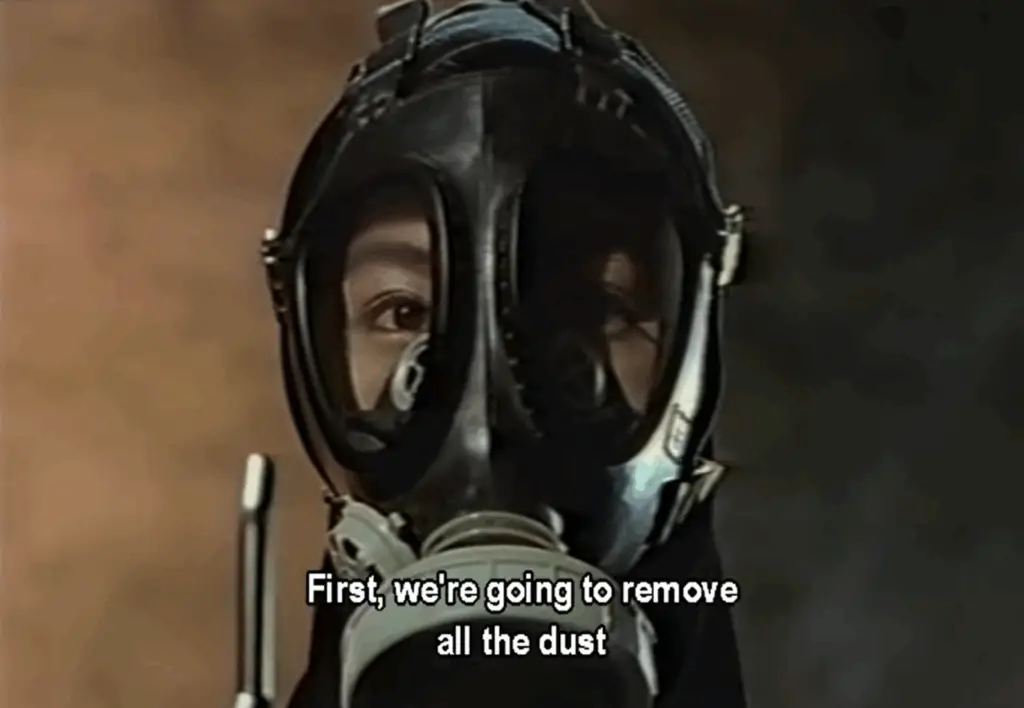

With so much intriguing lore surrounding the film it’s a bit easy to forget about Sweet Home, the actual movie. I think it’s one of those mostly entertaining movies that doesn’t quite excel at what it accomplishes but it never becomes boring or too predictable, either. It’s not a terribly scary movie, even if it does entail some VERY morbid elements (as in, the plot revolves around a woman who incinerated her own babies alive.) The special effects in the film are nothing short of phenomenal, which is hardly a surprise considering Dick Smith, the same guy behind The Exorcist’s iconic makeup effects, also served a supervising role on this film. You can knock Sweet Home for a lot of things, but there’s no denying that its aesthetics are impressive.
The atmosphere of Sweet Home is a bit uneven. It’s pretty much an unabashed copy of The Haunting with a little bit of The Changeling thrown in for good measure. The tone tends to fluctuate from being a hokey, over the top supernatural horror yarn to a fairly staid melodrama to a wonky slapstick comedy — three VERY distinct flavors that don’t blend together that harmoniously. It’s never that spooky or that funny or that emotionally moving, although the film certainly tries to be all three things, and usually at the same time. It never really works as a whole, but it definitely works in certain parts. For example, the build-up in the film is actually quite good, as each character is adequately fleshed out and you get a lot of solid background on them that makes them feel truly unique and distinct. It’s a very small thing, storytelling wise, but it’s remarkable just how many haunted house movies totally overlook it.
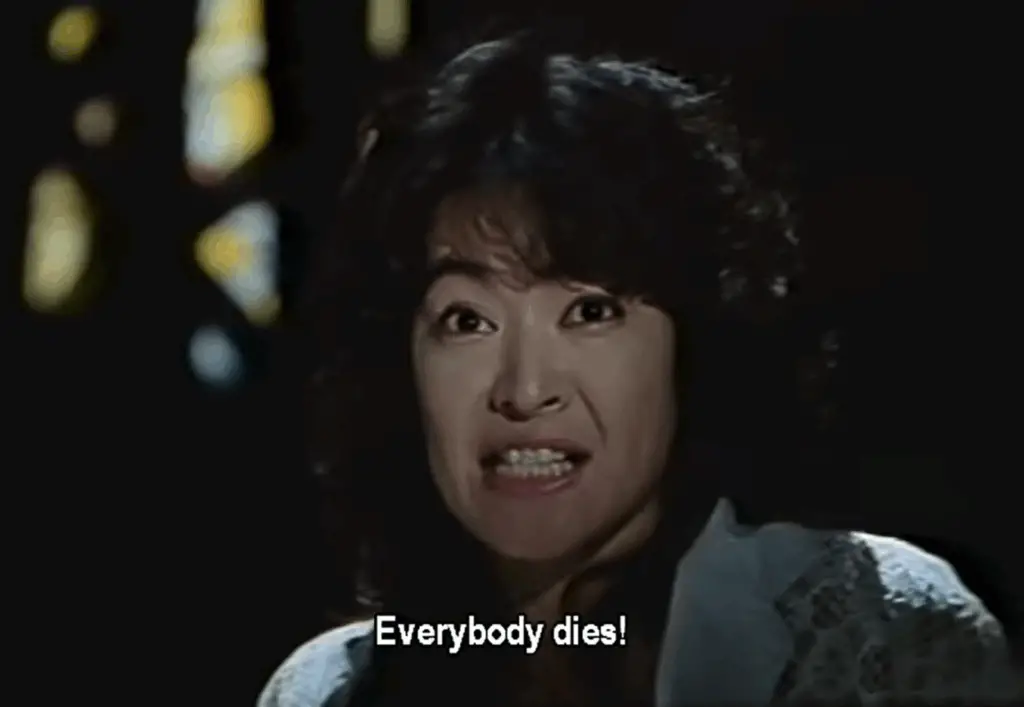
You kinda know what to expect here. There’s a TV crew that’s trying to find out if a haunted house is really haunted, and since we wouldn’t have much of a movie if it wasn’t, I think you already know the answer. There’s a lot of time built upfront with the characters, who each have different motives for investigating the cursed property. There’s probably too much background, if we were being honest with ourselves, but again, it’s nice to see some character development in a film of its type.
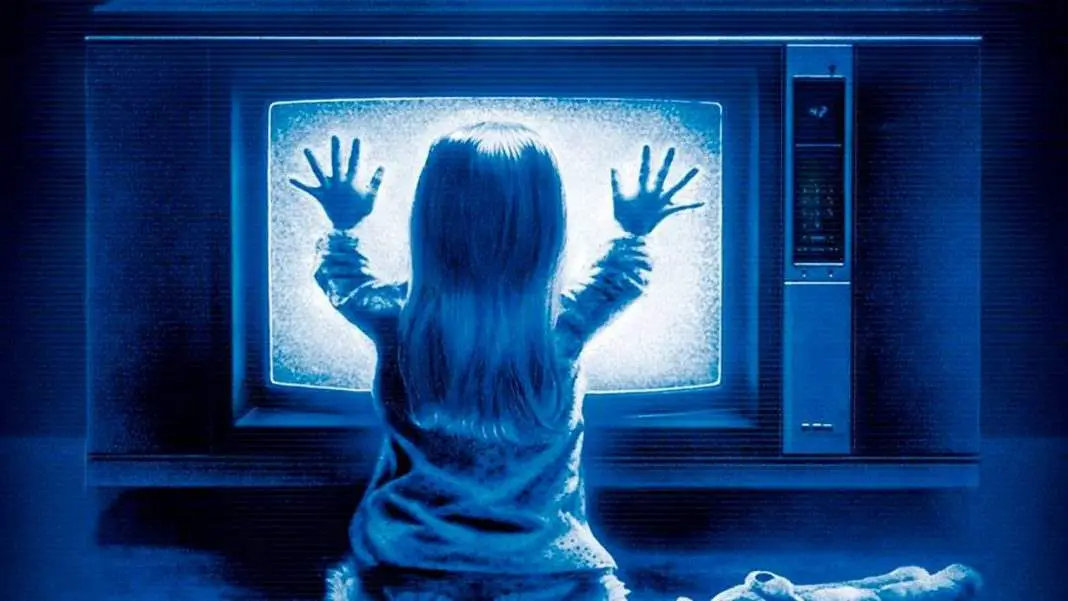
You don’t have to wait for things to get kooky, thankfully. The movie doesn’t try to bluff you or misdirect you, and as soon as the origin point of all of the supernatural havoc is revealed it’s just fill tilt Poltergeist paranoia. Some of the jump scares are a bit too on the nose, but since when did we ever EXPECT haunted house movies to be all subtle and stuff?
Sure, some of the non-makeup effects are kinda’ corny (what was it with animated blue lightning in late ‘80s horror movies?) and the acting isn’t exactly 100 percent convincing all of the time. But for every area where Sweet Home falters, it usually recovers in short order and hits you back with some quality material. I mean, the grand finale alone is worth checking out the flick, no matter how degraded and beat to crap the video image may be.
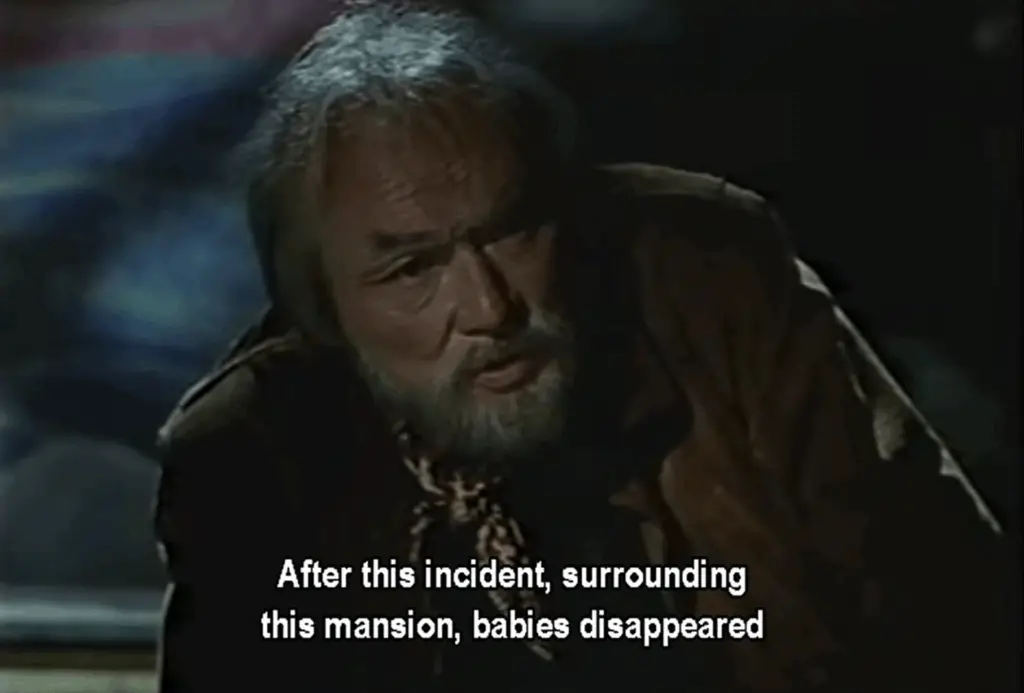
It’s a good little ghost movie, even if it’s maybe not a great one. You can obviously see where it’s trying to imitate some older movies and the pacing is a bit awkward (which is a given, considering how the film was so hastily re-edited.) But as long as you keep your expectations tempered and don’t mind an occasionally grating soundtrack, I feel you can have a lot of low-key fun with this one. It’s especially worthy of consideration if you’ve played the tie-in Famicom video game — which became the base inspiration for Resident Evil, as mentioned earlier – and wanted to see just how much of the movie actually carried over in the 8-bit translation.
Sure, we’ll always lament losing Kurosawa’s real vision for the film. But even in such a tattered and compromised state, Sweet Home is still amusing and mildly gripping stuff. You may not want to move into Sweet Home, but you’ll at least want to visit it once in your lifetime.