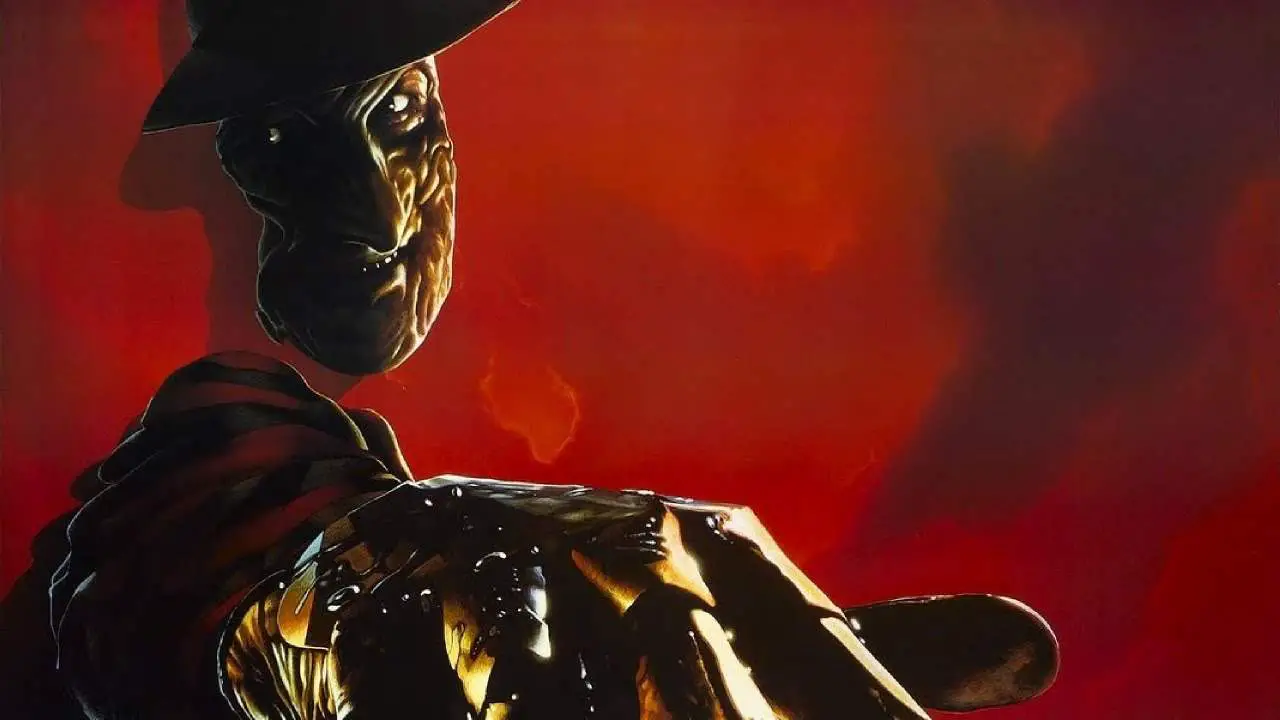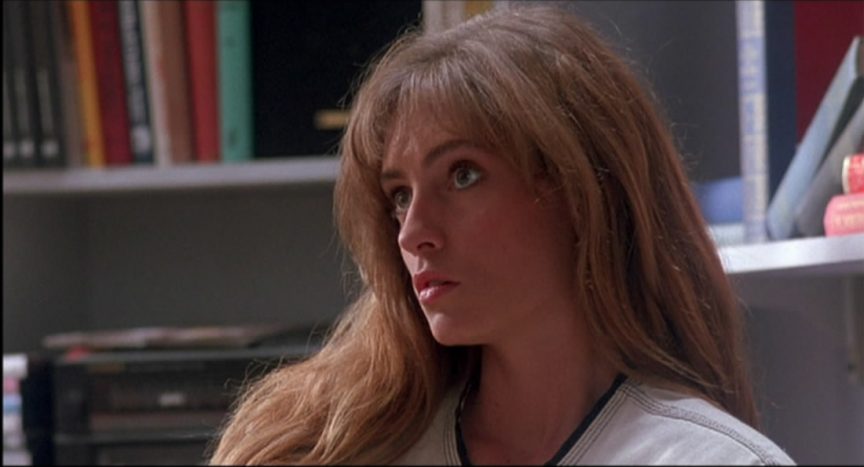
A Nightmare on Elm Street 5: The Dream Child has the largely undeserved reputation as one of the worst Elm Street sequels. I count myself among a growing number of fans who believe that is anything but the truth. While I intend to discuss why Dream Child deserves more respect as a sequel, I want to make ample space to discuss Greta Gibson, as played by Erika Anderson-Butler.
Slasher characters are often developed just enough to fit certain cliches. If they’re lucky to get that much focus. Standbys include:
- The vain, mean girl
- The meathead jock
- The obnoxious practical joker
- The supposed nice guy
- The actual nice guy
- The passive aggressive nerd
- The mousy girl who is “surprisingly attractive” without her glasses.
Slasher movies will only put so much development into characters before they’re killed off. On the flip-side, these characters are often horrible and unlikable on purpose. Studios believe that audiences enjoys seeing these characters die. The Friday the 13th movies loved doing this, with standouts like Melissa and Dr. Crews from Part VII.
The Nightmare on Elm Street movies went in the opposite direction, by making us like the characters opposite the loathsome Freddy Krueger. Though the franchise focused on Freddy’s comedic elements by Part 3, it was Part 5 that made an effort to develop its cast. The juxtaposition of Dream Child’s endearing heroes with Freddy at his cruelest might’ve been one reason why fans initially rejected this movie. It’s not as fun cheering Freddy on when you feel bad for his victims.
Despite the time crunch put on the crew to finish Dream Child within a year, actors like Lisa Wilcox, Kelly Jo Minter, Joe Seeley, Danny Hassel, and Erika Anderson-Butler did their best to give convincing performances. Like professionals they worked with what they were given and deserve to be recognized for that.
Also See: Seven Horror Movies Almost Ruined by Their Own Hype


A Nightmare on Elm Street 5: The Dream Child continued the story of Alice Johnson, the Dream Master who defeated Freddy Krueger and freed the souls of all his victims. After graduating high school alongside her boyfriend Dan Jordan and their friends Greta Gibson, Yvonne Miller, and Mark Gray, Alice gets pitted against Freddy again when he uses her unborn child’s dreams as a power source.
Dream Child sported a dark, gothic atmosphere with Catholic imagery and grotesque practical effects for some of the most disturbing moments in the franchise.
Despite dying before the film’s first half ended, Greta Gibson’s character is one of the most well-remembered aspects of Dream Child. Some of that is likely due to Greta having one of the most horrific deaths in the franchise.
Greta is choked to death by Freddy, who makes her eat her own organs. Her face is hideously distorted from both “food” and vomit in her cheeks. One of the biggest sources of contention within the fandom was the official release of Dream Child editing too much of this scene to the point it’s not as scary.
This is one of the few instances in the franchise where a character got an “audience” for their death. Greta Gibson’s nightmare takes place at her mother’s dinner party, where everyone laughs as Greta eats herself to death. In the real world, they simply stare at her before she chokes to death. Not only is Greta’s death one of the most horrific, but also one of the most humiliating.

Despite her limited screen time, Erika Anderson-Butler puts in one of the better performances in Dream Child. She defies expectations of what a rich model-in-training would be like and delivers a well-meaning, compassionate character who grew this way despite her domineering parent. Clearly I’m not the only person whom Anderson-Butler left an impression on, what with Nicole Dollanganger’s album Greta Gibson Forever.
Greta Gibson is introduced as one of Alice Johnson’s new friends. The script describes her as “Proof of what God’s capable of when he’s having a good day.” Yet Greta ends up being an interesting character study of frustration, love, anger, and compassion.
Greta Gibson is accompanied at the graduation ceremony with her mother Racine (Pat Sturges). From the beginning, Greta is established as a gorgeous young woman with a sense of humor and some resentment towards her mother. When Greta is tempted to have a taste of Mark Gray’s novelty lollipop, Racine watches Greta like a hawk and loudly expresses her disapproval.
“Greta! That’s NOT what a cover girl puts in her body.”
When Racine relishes the chance for Greta to get photographed, Greta gets annoyed then jokes in a Thurston Howell-esque voice:
“I have to go gnash my teeth for the paparazzi.”
Greta’s “the hot girl” of Alice’s new friends, opposite Mark as “the nerdy guy” and Yvonne as “the hard worker.” Yet she rarely, if ever, talks about modeling for herself. Nor does she really care about her looks, her social standing, or money.
Greta is ok with not taking herself too seriously. She doesn’t make a big deal about her appearance, and doesn’t make a big deal about not making a big deal. It makes her friendship with Alice and the others more genuine. Instead of trying to rebel against Racine by associating with kids who aren’t as rich as her, Greta is friends with Alice, Mark, Yvonne and Dan because she wants to be.

While Greta is considered the attractive/fashionable one in Alice’s group, she also acts as an atypical version of the mom friend. Atypical in that you wouldn’t expect the supposed appearance-oriented character to also be the mom friend. Greta gently makes jokes about Mark’s comics full of blood and guts, while blood in real life makes Mark squeamish. When Alice tries convincing her friends about Freddy Krueger’s existence, Greta doesn’t necessarily believe Alice yet assures Alice she’s in her corner.
“The bottom line, Alice, is that if anything is out to get you supernatural or otherwise, they’re gonna have to go through us first.”
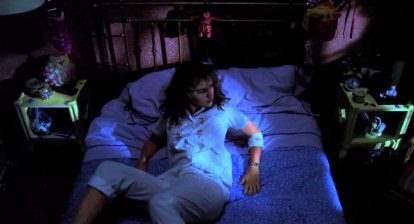
The real moment confirming Greta’s a caring individual and good friend is after Dan Jordan is killed. In one of my favorite scenes of the movie, we’re treated to Greta alone in her bedroom as she quietly mourns poor Dan.
Looking over Dan’s yearbook photos and the graduation photo, Greta gently cries over Dan. She holds onto one of her dolls for comfort because God knows her mom’s not giving any support. Racine’s more worried about Greta getting enough sleep.
“You don’t want any circles under your beautiful eyes!”
The dolls in Greta’s room foreshadow Greta’s eventual death and represent how she’s treated years younger by her mom. At the same time, Anderson-Butler does a spectacular job making us believe Greta is legitimately upset over Dan without overdoing it. We’re here for foreshadowing, but also Greta and her grief.
It’s Greta’s love for her friends that gives her strength in the face of her overbearing mother. Greta is willing to put up with a lot from Racine when it’s just her, but draws the line when Racine insults her friends. During the dinner party, Greta is not afraid to blast Racine in front of everyone when she shows disrespect to Dan’s memory.
“Greta, you’re being offered the opportunity of a lifetime. I think you should show a little gratitude?”
“One of my friends died yesterday, mother. Do you mind if I take a few hours off to remember him?”
Greta’s not at all worried about being standoffish or rude in front of these people who could shape her future. Her friend died, she will mourn him, and she will not put up with this if she can help it.

In the sequence with Greta being “complimented” about her “perfect body”, her lack of enthusiasm feels relevant with today’s media. If Dream Child was shot today, chances are Greta would’ve been told to smile more. Yet Greta Gibson will not smile or pretend to be happy if she absolutely doesn’t want to.
The juxtaposition between Greta and Racine is a rather interesting take on the light/dark, white/black contrast. While the light/white character (Greta) is considered good, and the dark/black character (Racine) bad, the film chose to frame this as the light character being openly frustrated and negative while the dark character is supportive and positive. Though maybe the film could’ve avoided the white = good, black = bad symbolism.
It’s telling that Greta’s death marks the moment in the movie where things get real. While Dan Jordan’s death was also tragic, a sense of genuine despair manifests following Greta’s murder. It’s like Mark and Yvonne were closer to Greta than Dan since her death affects them the hardest. That Greta’s death really is that sad almost makes it worth killing her off so quickly. Almost.
Despite being the bombshell of the cast, Greta’s appearance isn’t explicitly objectified for the audience’s pleasure. There are scenes of her in a bathing suit and night clothes, but no attempt’s made for titillation. Greta’s mother and her entourage are the ones to openly objectify Greta, almost like commentary about the slasher genre’s Madonna/Whore Complex.
Your typical slasher movie prides itself on sexy teen escapades. Those sexy teens usually die as punishment because they drink, do drugs, get naked, and have sex. It’s taken for granted the characters likely to survive are the wholesome (but still attractive) virgins. These characters give the audience what they want, and then the narrative kills them for it.
Meanwhile, your female characters are split between the pure virgins and the sexually generous girls. The virgins are meant to be beautiful and wholesome, and thus are rewarded by living. The loose girls are expected to flash their chest and have sex to arouse the audience, and then get violently butchered as punishment despite doing exactly what they were expected to do. They’re pulled to both ends of the spectrum.
In the case of Greta Gibson, she’s treated as both child and sex object by her mother Racine. While it doesn’t reach a point where Racine literally has Greta sexually exploited, she still allows older men to judge Greta’s “perfect body.” Racine’s fine with Greta being leered at by slime-balls and perverts, and chides her like an infant for being unappreciative at their supposed opportunities.
Greta’s expected to be both child and woman; child in the sense her mom can discipline her, woman in that she can be judged and used by men. Others cannot simply let her be her own person without forcing her into both ends of the spectrum at once.
However, looking at Greta’s core being, she doesn’t fall into the Madonna or Whore role. She’s not “pure” because she gets angry and holds a lot of righteous resentment at people like her mother. Yet she isn’t seen as sexually generous because she doesn’t appear to be solely fixated on sex. She’s complicated. She’s simply a woman (with an oblivious mother).
This oblivious attitude we frequently see from Racine continues until Greta Gibson literally dies right in front of everyone. While Greta’s clearly choking to death in front of Racine and her guests, they can’t recognize that Greta is in pain. At best, they’re confused and only show concern when Greta drops dead. Greta’s pain and the damage Racine subjected her to doesn’t become obvious until it’s too late. It’s a rare occasion where an Elm Street teenager’s parent is literally culpable for their death. Greta might’ve been saved had Racine or any of the guests tried to help.
Several scenes throughout the movie are powered by Anderson-Butler’s emotional conveyance through her eyes alone. Her grief over Dan, her disgust dealing with Racine and her guests, her horrified realization over what Freddy is making her eat, and her broken despair learning her mom let her die.
The point being, the Greta Gibson character is an interesting expression of the parent/child dynamic of the Elm Street movies. Which is especially appropriate in a film where the lead character is pregnant. Greta is a complicated, loving, and exhausted young woman whose strength manifests through her emotional complexity and ability to care about other people.
Opposite Lisa Wilcox’s Alice and Kelly Jo Minter’s Yvonne, it’s a shame the film didn’t devote more time to seeing Greta’s strength further develop as an aid to defeat Freddy, rather than her being used to get a reaction out of Mark Gray after her death. Regardless, none of that would’ve been evident if not for Erika Anderson-Butler’s excellent performance.
Beyond Dream Child, Erika Anderson-Butler’s also played Selina Swift, the actress playing twin sisters Emerald and Jade from Twin Peaks’ show-within-a-show Invitation to Love. She starred as the title character in Zandalee opposite Nicholas Cage and Judge Reinhold. She’s been in thrillers such as Shadows of the Past, Quake, and Object of Obsession. Outside of movies, she’s had roles on TV shows such as The Red Shoe Diaries and Silk Stalkings.
Besides acting, Erika Anderson-Butler’s more known for her modeling work, and recently married Richard Butler (founder and lead singer of The Psychedelic Furs) on September 16th 2020.
(P.S., if anyone knows where I can find an English Language copy of Shadows of the Past please let me know in the comments section).