Homecoming is a Masters of Horror outing well worth revisiting
Homecoming is a movie that requires context … and a lot of it.
The Masters of Horror episode — basically, a 59-minute, standalone almost feature film — first aired in December 2005, although it wouldn’t hit DVD until July 2006.
If you weren’t alive back then (or cognizant of U.S. foreign policy at the time) you’re not going to grasp the full intent of Joe Dante’s mini-movie. It was a reactionary movie about an incredibly contentious political issue and possibly the only mainstream-ish genre picture to directly deal with the U.S. military occupation of Iraq while it was still ongoing. Even more bizarre, it’s one of the few U.S. movies of any genre classification to make a direct anti-war statement explicitly about the George W. Bush administration. Circa 2006, you had this and Fahrenheit 9/11 and that was pretty much it.
Joe Dante’s Homecoming is not a subtle movie. It’s technically a Roman a clef about the War in Iraq, but you obviously know who the real world counterparts to all of the characters in the film are supposed to be. Karl Rove, Donald Rumsfeld, Ann Coulter … they’re all in the movie, even if they’re not officially in the movie. There’s even a character that seems to be a stand-in for Cindy Sheehan (one of the most notable anti-war critics of the W years), although Dante swears that it was just a coincidence in the old Homecoming DVD director’s commentary track.
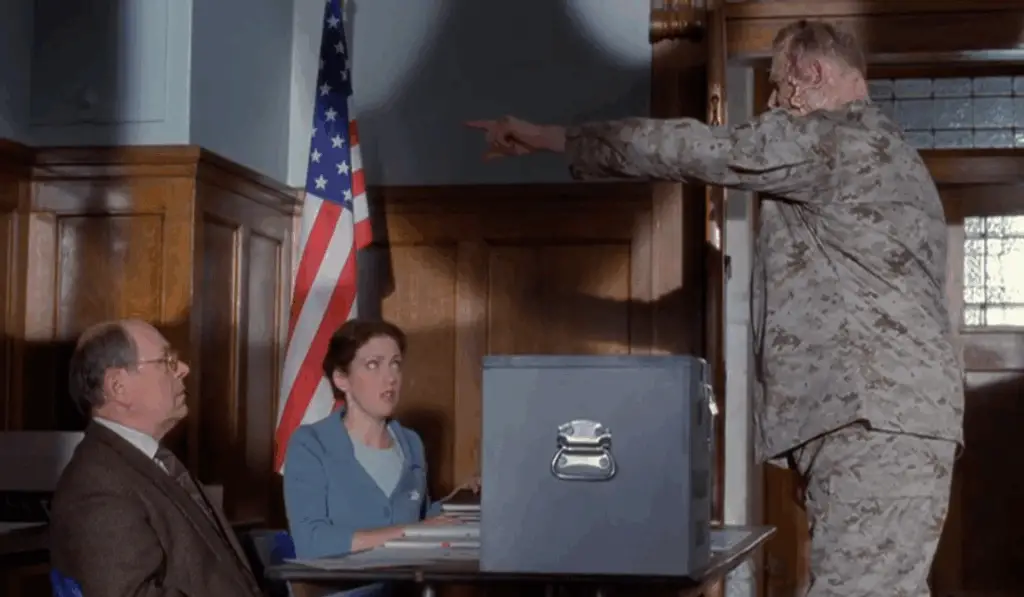

The movie itself is based on a Dale Bailey short story from 2002 called Death and Suffrage. The core of Homecoming follows the story pretty well, but Bailey’s source material is really more of a social satire than it is a commentary on warfare (remember, the invasion of Iraq didn’t happen until 2003.) The gist of that story is what would happen if the dead suddenly came to life again … and demanded voting rights? Whereas Bailey’s story is essentially George A. Romero’s The West Wing, Dante’s take on the adaptation is a very different kind of story. It’s still a movie about zombies and voting rights, but there’s a new wrinkle to the tale. All of the reanimated corpses demanding democratic representation just so happen to be U.S. soldiers killed in action in Iraq — and they all want to vote for the candidate pledging an end to the war as soon as possible.
It’s an odd premise for a film but it works because of one thing: Dante’s unfettering resentment of the war in Iraq. He pulls no punches, he muddies no waters, he goes straight for the jugular and doesn’t let up. This movie seethes over the Bush administration and the cable news industry and the lies that led to the Iraq occupation in the first place. It’s a passionate film that doesn’t even remotely try to mask its ire, indignation and heartbreak. As far as bluntly political horror films go, this might be the most unapologetically partisan one ever made.
Obviously if you supported Bush’s military interventionism or harbor any sort of Republican-adjacent ideologies regarding the “global war on terror” you’re going to hate the movie. And that’s the point — Dante doesn’t hide his political intentions at all with this movie. You feel like Dante directed the film with his fist clenched and ready to toss a punch at any moment. It’s incendiary but incendiary in a novel way. And 20 years later, I don’t think I’ve seen any horror movie that I’d consider a one-to-one comparison point.
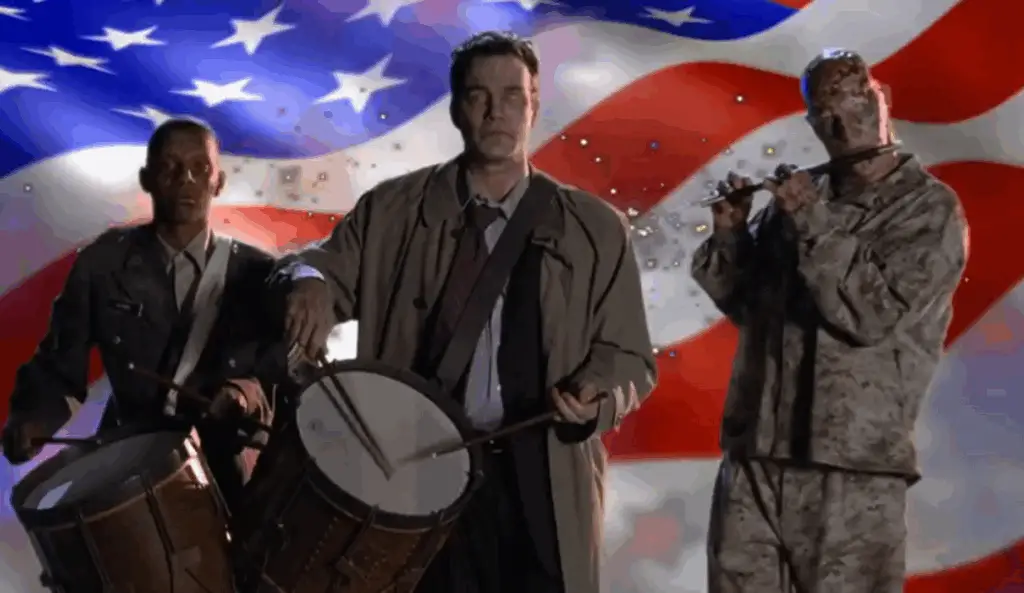
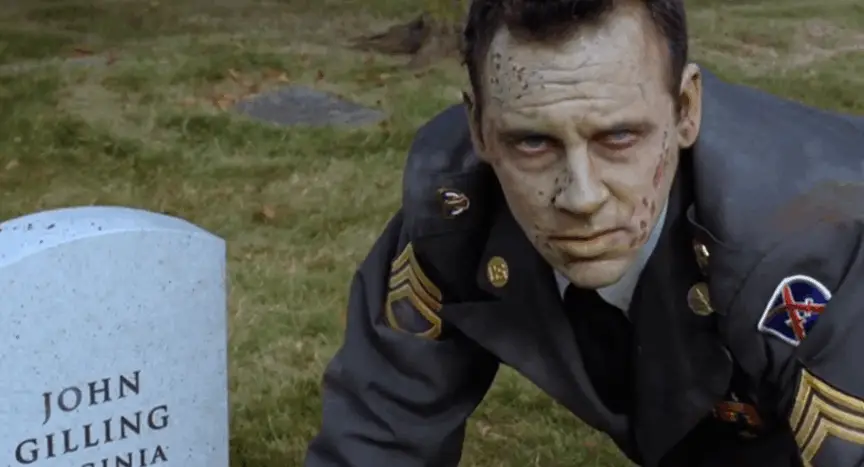
Jon Tenney plays the main character of Homecoming. He’s a GOP speech writer who goes onto a talk show, positioned opposite a mother who just lost her son in Iraq. In an impromptu response, Tenney — half-facetiously — wishes that her dead son could come back to life. Well, a few hours later, he gets his wish. Not only did her son rise from the grave, so did every other U.S. soldier killed in Iraq … or, at least, all of the soldiers who died believing they were lied to and misled in the first place.
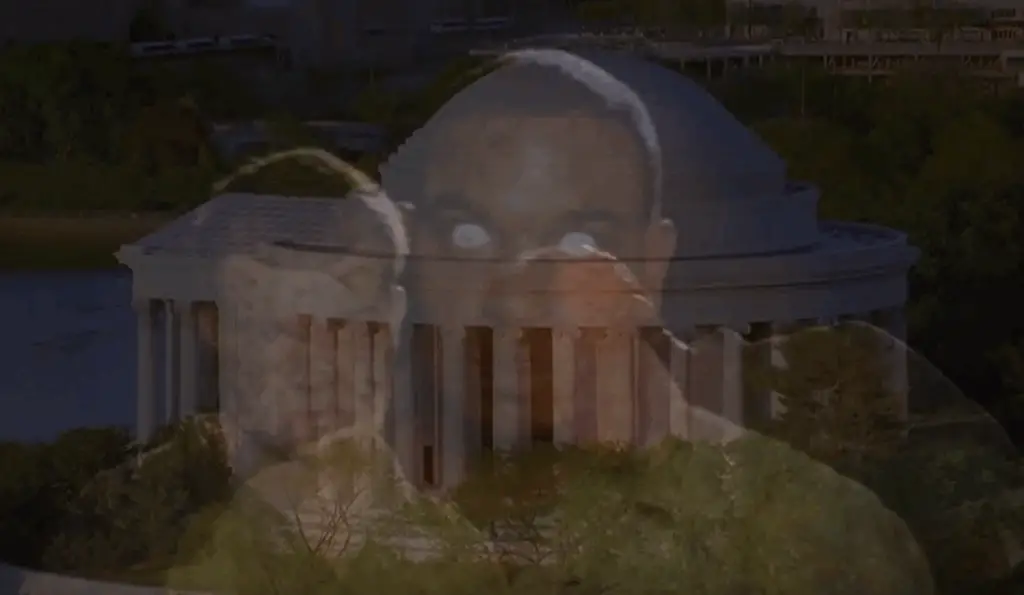
We’ve got Thea Gill playing your stock blonde-and-blue-eyed Republican hellcat commentator and Robert Picardo literally channeling the spirt of Karl Rove (W’s deputy chief of staff) in a role that is pretty much Karl Rove only they don’t call him Karl Rove. As Election Day approaches, the GOP brass gets antsy about their polling numbers and they phone in some last-second trickery to ensure a skin of their teeth re-election. And so the liberal, pacifist zombie menace seems to be at its end … that is, until Arlington National Cemetery starts quaking and the reinforcements arrive to make a stand for representative democracy.
Considering the subject material Homecoming seems like a movie that would feel dated. And sure, it does feel dated in some respects. But at heart, the thing the movie is about hasn’t aged at all — indeed, there are certain parts of the film that feel almost supernaturally prescient about where American politics were headed in the not too distant future. And there are certainly some evergreen aspects of the film that will always strike a chord with you. Probably the best scene in the entire movie is a throwaway moment where a reanimated zombie stumbles into a cafe and the kindly old owners (who have a son serving duty themselves) feed him a sandwich and a cup of coffee. Replace “zombie veterans” with “homeless veterans” and all of a sudden Homecoming doesn’t feel so far-fetched and distanced from reality anymore.
It’s a savage movie, for sure. There are a few bits of dialogue that absolutely rip into the Bush Doctrine, especially the lines we get from Picardo. But as caustic as the film may be, it still has that oddball Dante humor. Probably the funniest gag in the film is when a Jerry Falwell-type preacher shows up on a talk show and claims the resurrected soldiers are a sign of God’s support of Bush’s war … only to turn around and call it the work of Satan when he finds out they’re all voting Democrat.
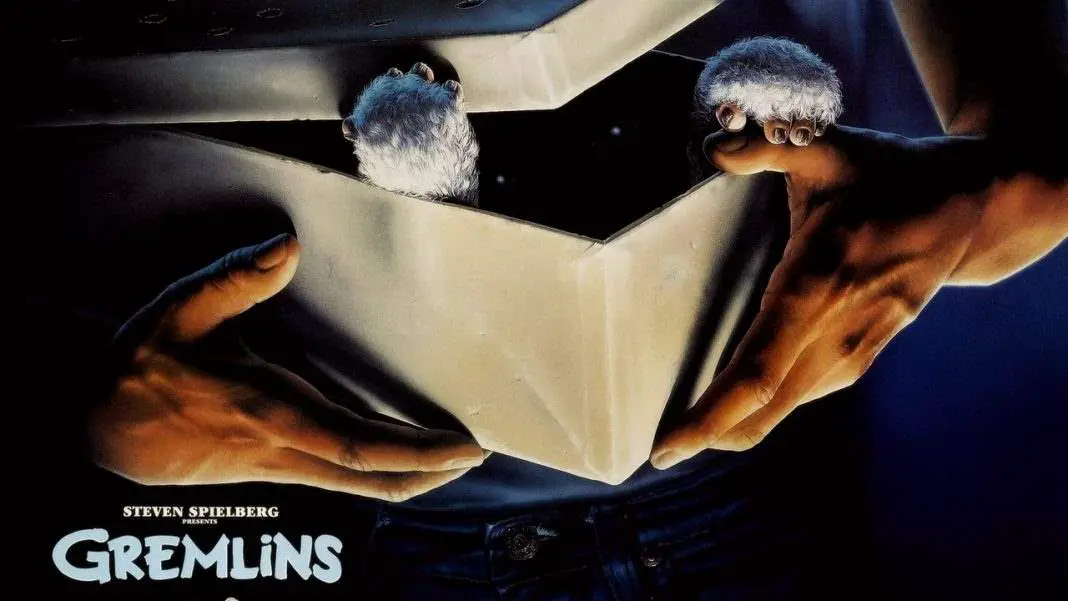
Joe Dante is one of those guys whose output is still underrated in a lot of respects. To most filmgoers he’ll “just” be the guy who gave us the first two Gremlins movies, but when you look at his filmography it’s loaded with bangers, and diverse bangers at that. Piranha, The Howling, The ‘Burbs, Matinee, Innerspace … that’s a heck of a resume, and I’m definitely leaving out some choice cuts from the latter half of his career. Yet I don’t think there’s anything in his oeuvre as deeply personal and heartfelt as Homecoming. This is a film that screams and yells and shouts and pounds the walls at a time when most American filmmakers wouldn’t even consider the topic at all. As far as anti-war horror parables go, it’s definitely up there with stuff like Dead of Night and Combat Shock, even if it does cut into the material with a bit more humor and sarcasm. But when Homecoming is over, there is NO mistaking what Dante’s message to the masses is. Some films wear their heart on their sleeve, this movie wears all of its internal organs on its sleeve. It’s a loud and clear statement and if you don’t like it, sucks to be you.
Not everybody is going to like Homecoming and you already know who you are. But as a work of unabashed horror agitprop, there’s no denying the intensity and passion of Dante’s film. As long as there is war, this film is going to remain relevant … and heartbreaking, for a litany of reasons.